
Archaeology Group Lecture: Finding Mesolithic People under the Solent
15th September 2022 at 7:30 pm
Blandford Parish Centre, The Tabernacle, DT11 7DW
The first lecture of our 2022-23 series will be given by Rebecca Ferreira, a PhD Researcher from Southampton University.
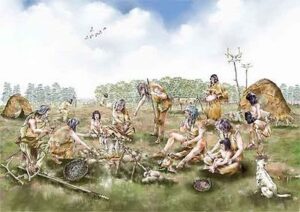 The Mesolithic of what is now Britain was a period of great environmental change, with rising sea-levels instigating the reconfiguration and submergence of large areas of contemporary landscapes. Despite long-accepted evidence of this, there has been a limited body of research engaging with these now-inundated areas. This has resulted in partial interpretations where activities on productive, lower-lying, and coastal areas are not visible. The past few decades, however, have seen a resurgence of submerged landscape research in northwest Europe, predominantly focused on the North Sea; swathes of once-habitable land that connected Britain to the continent. This work highlighted the need to integrate the terrestrial and submerged records to re-evaluate and expand our understanding of Mesolithic people’s lifeways and responses to this change.
The North Sea, however, is huge, with complex geological sequences and mobile sediments making identification of archaeological sites difficult. By contrast, the Solent and Southampton Water region on the south coast of Britain provides the only known in situ evidence of submerged Mesolithic activity in the UK and represents one of the world’s best archives of sea-level change data. Further to this, there is a considerable amount of archaeological and palaeoenvironmental evidence available in the terrestrial regions that flank the Solent and Southampton Waters in the north (Hampshire) and south (Isle of Wight). This location therefore provides the best possible chance of engaging with and integrating the Mesolithic record both on and offshore and is the reason that Rebecca chose to focus on this area for her Ph.D.
This presentation will provide a background to Rebecca’s project, the research questions and rationale for undertaking this work, and the current results of her research as she enters the third year of her Ph.D.
Free to Museum Members,
£3 for non-members.